1. Introduction
In healthcare, scientific research, and industrial settings, the accuracy of test results and research findings heavily depends on the quality of sample collection and preservation. Sample bottles are engineered to address the critical need of safeguarding sample integrity from collection to analysis. Unlike ordinary containers, they are designed to resist chemical reactions, prevent leakage, and minimize contamination—factors that directly impact the reliability of diagnostic tests, environmental assessments, and industrial quality checks. From clinical urine and blood samples to environmental water and soil specimens, sample bottles are indispensable in ensuring that samples remain unaltered, enabling accurate and reliable analysis. With the growing demand for precise testing across industries, the global sample bottle market continues to expand, driven by advancements in material science and increasing emphasis on quality control.
2. Structure and Key Components
2.1 Core Components
- Bottle Body: The main container, typically made of medical-grade or laboratory-grade materials (glass, plastic, or specialized polymers) selected based on the sample type. It features a smooth inner surface to prevent sample adhesion and ensure complete sample retrieval.
- Cap/Closure: A leak-proof, airtight lid (screw-on, snap-on, or septum-sealed) that prevents sample leakage, evaporation, and contamination from external elements. Septum caps are often used for samples requiring repeated access without opening the entire container.
- Volume Markings: Clear, precise graduations on the bottle body (in milliliters or ounces) to ensure accurate sample collection and measurement, critical for standardized testing protocols.
- Labeling Area: A smooth, non-porous surface on the bottle body for writing or attaching labels, allowing clear identification of sample information (patient name, collection date, sample type, etc.).
- Specialized Additives (Optional): Some sample bottles come pre-loaded with preservatives, anticoagulants, or stabilizers (e.g., EDTA for blood samples, formalin for tissue samples) to maintain sample integrity during storage and transportation.
2.2 Design Principles
Sample bottles are designed based on two core principles: sample integrity and user safety. The material of the bottle body is chosen to be chemically inert with the sample—for example, glass is ideal for organic solvents and acidic samples, while plastic (PP, PE, PET) is preferred for aqueous samples and biological fluids due to its shatter resistance. The closure system is engineered to create an airtight seal, preventing leakage and contamination, while volume markings are calibrated to meet industry standards for accuracy. For sterile applications (e.g., clinical specimens), sample bottles are pre-sterilized and packaged in sealed containers to ensure they are free from bacteria and other contaminants before use.
3. Classification and Key Features
3.1 Classification
- By Material: Glass sample bottles (heat-resistant, chemically inert, suitable for organic samples and high-temperature sterilization) and plastic sample bottles (lightweight, shatter-resistant, cost-effective, ideal for aqueous and biological samples).
- By Sample Type: Clinical sample bottles (for blood, urine, saliva, tissue; often pre-loaded with additives), environmental sample bottles (for water, soil, air; resistant to environmental contaminants), and industrial sample bottles (for chemicals, oils, dyes; chemical-resistant).
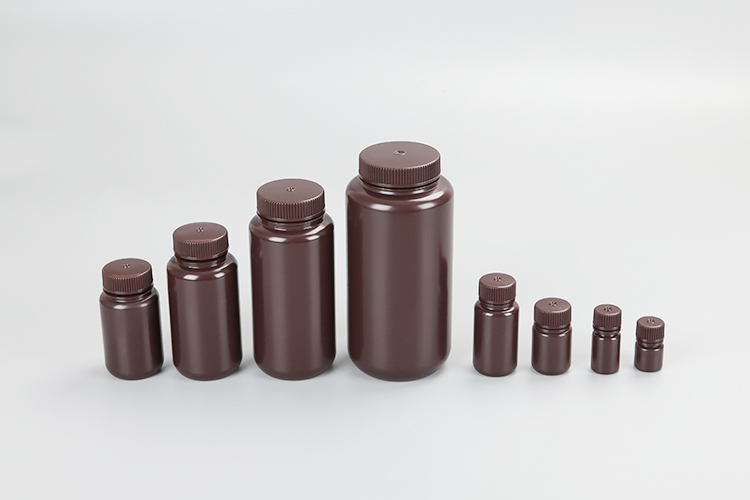
- By Capacity: Small-capacity (1–10 mL, for micro-samples), medium-capacity (10–100 mL, for routine clinical and laboratory use), and large-capacity (100 mL–1 L, for environmental and industrial bulk samples).
- By Sterility: Sterile sample bottles (pre-sterilized, for clinical and biological samples) and non-sterile sample bottles (for non-biological, non-clinical applications such as chemical testing).
3.2 Core Features
- Leak-Proof and Airtight: The closure system ensures no sample leakage during transportation or storage, preventing contamination and maintaining sample concentration.
- Chemically Inert: Materials are compatible with a wide range of samples, avoiding chemical reactions that could alter sample composition and affect test results.
- Precise Volume Markings: Calibrated graduations ensure accurate sample collection, critical for standardized testing and research protocols.
- Sterility (When Required): Pre-sterilized bottles eliminate the risk of contamination, essential for clinical diagnostics and biological research.
- User-Friendly: Lightweight design, easy-to-open closures, and clear labeling areas simplify sample collection and identification.
4. Proper Usage and Maintenance
4.1 Correct Usage Steps
- Select the appropriate sample bottle based on the sample type (material compatibility), volume requirements, and sterility needs. For clinical samples, ensure the bottle contains the correct additive (e.g., anticoagulant for blood).
- Inspect the bottle and cap for damage (cracks, chips, or worn closures) before use; discard any damaged containers to prevent leakage or contamination.
- Collect the sample carefully, filling the bottle to the required volume (using the volume markings) to ensure accurate testing. Avoid overfilling to prevent leakage when closing the cap.
- Securely close the cap by screwing or snapping it into place, ensuring an airtight seal. For septum caps, ensure the septum is intact and properly seated.
- Label the bottle immediately with all necessary information (sample type, collection date/time, patient ID, or sample ID) to avoid misidentification.
- Store and transport the sample according to the required conditions (e.g., refrigeration for biological samples, room temperature for chemical samples) to maintain integrity.
4.2 Maintenance and Hygiene
- Reusable Bottles: Clean thoroughly after use with detergent and warm water, rinse with deionized water, and sterilize (autoclaving for glass bottles, chemical sterilization for plastic bottles) before reuse. Inspect for wear or damage after each use and replace if necessary.
- Disposable Bottles: Discard after single use to prevent cross-contamination. Do not reuse disposable bottles, as they may degrade or retain residues from previous samples.
- Store sample bottles in a clean, dry, and dust-free environment, away from direct sunlight and extreme temperatures, to prevent material degradation.
- Check the expiration date of pre-sterilized or pre-loaded additive bottles; do not use expired containers, as sterility or additive effectiveness may be compromised.
5. Applications Across Industries
Sample bottles are widely used across multiple industries, each with specialized requirements:
- Healthcare and Clinical Diagnostics: Collecting blood, urine, saliva, stool, and tissue samples for diagnostic testing, disease monitoring, and medical research. These bottles often include additives to preserve sample integrity (e.g., EDTA for blood cell analysis, boric acid for urine preservation).
- Laboratory Research: Storing and transporting chemical reagents, biological cultures, and experimental samples in academic, pharmaceutical, and biotech research settings. Glass bottles are preferred for organic solvents and high-temperature experiments.
- Environmental Monitoring: Collecting water (drinking water, wastewater, groundwater), soil, and air samples to assess environmental quality, detect pollutants, and ensure compliance with environmental regulations.
- Industrial Quality Control: Testing raw materials, intermediate products, and finished goods in industries such as food and beverage, pharmaceuticals, chemicals, and oil and gas. Sample bottles are used to ensure product quality and safety.
6. Common Issues and Troubleshooting
- Sample Contamination: Caused by using non-sterile bottles, improper cleaning of reusable bottles, or contaminated closures. Solution: Use pre-sterilized bottles for clinical/biological samples, clean reusable bottles thoroughly, and replace damaged closures.
- Leakage: Resulting from loose caps, damaged bottle bodies, or overfilled bottles. Solution: Ensure the cap is securely closed, inspect bottles for damage before use, and avoid overfilling.
- Sample Degradation: Caused by using incompatible materials (e.g., plastic bottles with organic solvents) or improper storage conditions. Solution: Select the correct material for the sample type and store samples at the recommended temperature.
- Inaccurate Volume Measurement: Caused by using bottles with uncalibrated markings or incorrect filling. Solution: Use bottles with standardized volume markings and fill to the specified graduation line.
7. Development Trends
The global sample bottle market is evolving to meet the growing demand for precision, safety, and sustainability. Key trends include the development of eco-friendly materials (biodegradable plastics, recycled glass) to reduce environmental impact, the integration of smart labels (RFID tags) for easy sample tracking and identification, and the design of specialized bottles for emerging applications (e.g., COVID-19 testing, personalized medicine). Additionally, advancements in additive technology are improving sample preservation, extending the shelf life of specimens and ensuring more accurate test results. There is also a growing focus on user safety, with ergonomic designs and leak-proof closures to minimize the risk of exposure to hazardous samples.
8. Conclusion
Sample bottles are essential tools that underpin the accuracy and reliability of testing and research across healthcare, laboratory, environmental, and industrial sectors. Their design—focused on sample integrity, chemical compatibility, and user-friendliness—ensures that samples remain unaltered from collection to analysis. As industries continue to demand higher precision and sustainability, ongoing innovations in material science and design will further enhance the functionality and utility of sample bottles, supporting advancements in diagnostics, research, and quality control worldwide.