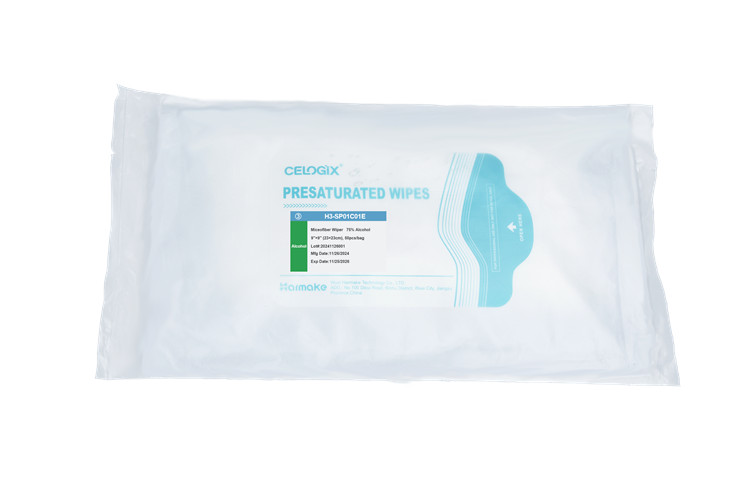
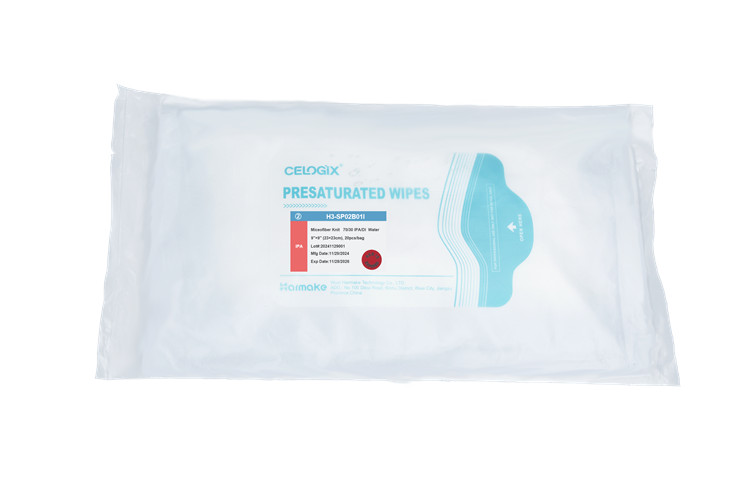
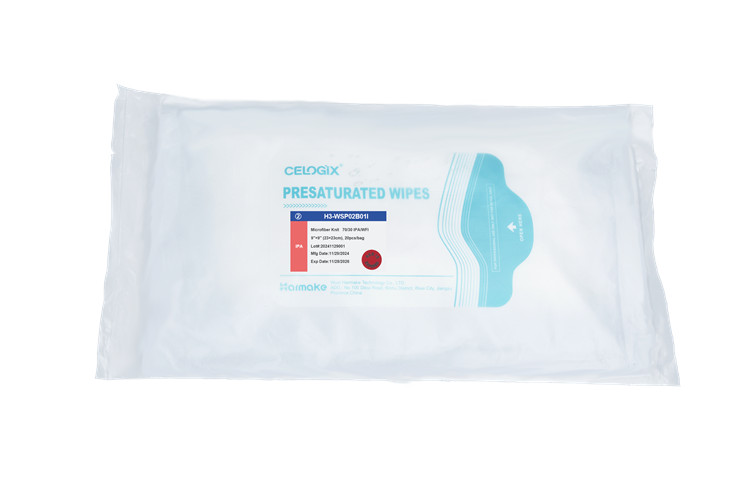
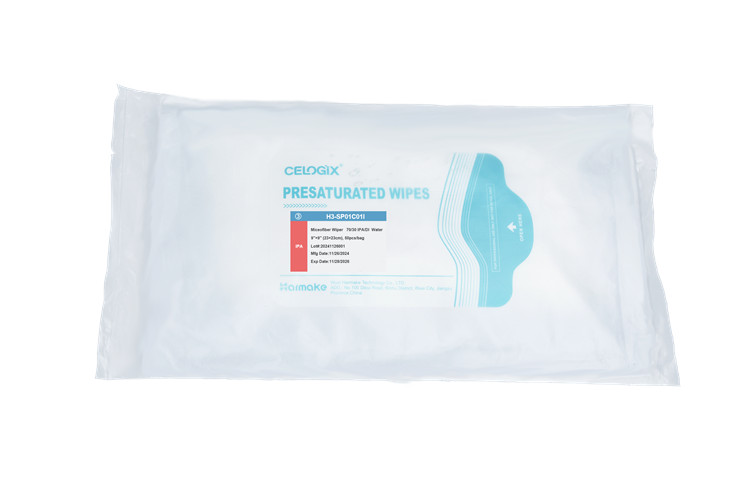
1. Overview of Easy-Tear Bags
Easy-tear bags are flexible packaging containers designed with controllable tear performance as the core characteristic, made of single-layer or multi-layer composite films. Their core design goal is to enable end-users to tear the bag open along a preset path with manual force (≤50N, in line with industry ergonomic standards) without additional tools, while ensuring that the packaging maintains excellent protection performance during transportation, storage and shelf display.
The tear performance of easy-tear bags is realized through two core technical paths: material intrinsic tearability and structural mechanical weakening. Single-layer films (e.g., LDPE, EVA) rely on their own molecular chain characteristics to achieve longitudinal or transverse easy tearing; multi-layer composite films, on the other hand, realize precise tearing through structural design (e.g., tear lines, notch structures) and adhesive layer matching.
With the diversification of application scenarios, easy-tear bags have formed a rich product system, including side-sealed bags, three-side sealed bags, stand-up pouches, zipper bags, and spouted bags. They comply with international standards such as ISO 8317 (child-resistant packaging) and ASTM D1922 (tear resistance testing), and have become an indispensable packaging form in modern logistics, medical care, and daily consumption.
2. Core Advantages of Easy-Tear Bags
Easy-tear bags have obvious competitive edges over traditional flexible packaging, covering user experience, logistics safety, production efficiency and cost control, which are the core reasons for their wide adoption across industries.
2.1 Unmatched User Convenience (Core Advantage)
The most prominent advantage of easy-tear bags is simplified opening operation, which solves the pain point of ""difficult to open"" for traditional packaging. For elderly users, children (under adult supervision) and on-the-go consumers, the preset tear notches and precise tear paths enable one-handed opening, greatly improving usage efficiency.
In scenarios requiring repeated opening and closing (e.g., medical powder packaging, snack packaging), easy-tear bags can be combined with zipper or resealable structures, realizing ""easy to tear for the first time, convenient to seal repeatedly"". In addition, the tear opening is neat and free of sharp edges, avoiding hand injuries caused by irregular tearing of traditional packaging, which meets ergonomic and safety requirements.
2.2 Excellent Barrier and Protection Performance
Advanced composite film technology enables easy-tear bags to balance tearability with multi-dimensional barrier performance. By combining materials such as PET, NY, AL, and PE/EVA, the packaging can achieve customized protection against oxygen, moisture, light, and oil, adapting to the storage requirements of different products.
For example, aluminum foil composite easy-tear bags for medical injections can achieve 100% light shielding and oxygen barrier, ensuring the stability of active pharmaceutical ingredients; high-barrier easy-tear bags for roasted seeds and nuts can effectively prevent moisture absorption and oxidation, extending the product shelf life by 30% compared with ordinary packaging. At the same time, the strong sealing performance of easy-tear bags (heat-sealing strength ≥ 15N/15mm) ensures that there is no leakage or breakage during transportation and storage.
2.3 High Compatibility with Automated Production
Easy-tear bags are highly compatible with modern automated packaging lines, realizing seamless connection with filling, sealing, coding and labeling equipment. The standardized tear notches and film thickness tolerance (±0.002mm) ensure stable feeding and positioning during the packaging process, reducing production downtime caused by packaging jamming.
For high-speed production lines (e.g., 120 bags/min for food packaging), easy-tear films with stable mechanical properties can maintain consistent tear performance without deformation or breakage during high-speed processing. In addition, easy-tear bags support various printing processes (gravure, flexo, digital printing), realizing high-definition brand display while ensuring functional performance.
2.4 Cost Optimization and Environmental Sustainability
Compared with rigid packaging (e.g., plastic bottles, metal cans), easy-tear bags have significant cost advantages in raw material consumption and logistics transportation. The material usage per unit product is reduced by 60%-80%, and the empty bags can be stacked and transported, reducing logistics volume and transportation costs by more than 50%.
In terms of environmental protection, easy-tear bags are developing towards monomaterialization and biodegradability. Single-material PE easy-tear bags can be recycled efficiently, solving the recycling difficulty of traditional multi-material composite packaging; biodegradable easy-tear bags made of PLA+PBAT have passed compostable certification (EN 13432), meeting the global low-carbon environmental protection policy requirements.
2.5 Customizable Tear Performance and Structural Design
Easy-tear bags support full-customization of tear performance and structure to adapt to different product characteristics and usage scenarios. The tear direction can be designed as longitudinal, transverse or arbitrary direction; the tear strength can be adjusted according to the target user group (e.g., lower tear strength for elderly care products, higher tear strength for industrial parts to prevent accidental opening).
Structurally, easy-tear bags can be integrated with various functional components such as zippers, spouts, hang holes, and tear-off tabs, realizing the integration of ""packaging, storage, and use"". For example, easy-tear spouted bags for liquid medical reagents combine easy tearing with precise pouring, avoiding product waste and contamination.
3. Production Process of Easy-Tear Bags: Core Technology and Key Parameters
The production of high-performance easy-tear bags relies on precise process control and material matching. The core production process includes material selection and compounding, mechanical weakening processing, printing and surface treatment, bag making and quality testing, among which material matching and weakening processing are the key to determining tear performance.
3.1 Material Selection and Compounding: The Foundation of Tear Performance
Material selection is the first step in the production of easy-tear bags, and the matching of base film and adhesive directly determines the tear mode and strength. According to the application scenario, materials are divided into single-layer easy-tear films and multi-layer composite easy-tear films.
3.1.1 Single-Layer Easy-Tear Film Materials
Suitable for low-barrier scenarios (e.g., daily necessities, light industrial parts), the main materials include:
- LDPE (Low-Density Polyethylene): The most common material, with excellent longitudinal tearability, low cost, and suitable for simple packaging such as side-sealed bags.
- EVA (Ethylene Vinyl Acetate): Adjusting the VA content (15%-30%) can realize controllable tear strength, soft texture, and suitable for medical soft packaging.
- Metallocene PE (mPE): Has uniform molecular weight distribution, stable tear performance, and high sealing strength, suitable for high-speed packaging lines.
3.1.2 Multi-Layer Composite Film Materials
Suitable for high-barrier scenarios (e.g., medical supplies, high-end food), the composite structure follows the principle of ""hard outer layer + tearable middle layer + sealing inner layer"", typical combinations include:
- PET/Adhesive/EVA/PE: PET provides mechanical strength and printing performance, EVA realizes easy tearing, PE ensures sealing performance, suitable for medical device packaging.
- NY/Adhesive/LDPE: NY improves puncture resistance, LDPE provides tearability, suitable for packaging of sharp industrial parts.
- PET/AL/Adhesive/EVA: Aluminum foil realizes full barrier, EVA ensures easy tearing, suitable for injection powder and other pharmaceutical packaging.
The compounding process mainly adopts dry compounding and extrusion compounding. Dry compounding is suitable for high-precision composite films, with the adhesive coating amount controlled at 2.5-3.5g/m² to ensure that the adhesive layer breaks first during tearing, realizing neat separation; extrusion compounding is suitable for cost-sensitive products, with the melt temperature controlled at 300-330℃ to avoid material degradation affecting tear performance.
3.2 Mechanical Weakening Processing: Key to Precise Tearing
For multi-layer composite films that are difficult to tear due to high strength, mechanical weakening processing is required to form a preset tear path, which is the core process to realize controllable tearing. Common weakening technologies include:
3.2.1 Notch Processing
The most basic weakening method, completed by a precision notching machine during the bag making process. The notch forms a stress concentration point, guiding the tear to extend along the preset direction. Key parameters:
- Notch type: V-shaped (most common), U-shaped, or straight notch, with a depth of 1-3mm (adjusted according to film thickness).
- Notch position: Side seal, top seal or bottom seal, ensuring alignment with the tear path (error ≤ 0.5mm).
3.2.2 Micro-Perforation Tear Line Technology
Suitable for high-precision packaging (e.g., medical blister bags), a laser micro-perforation machine is used to form a continuous micro-perforation line (hole diameter 0.05-0.1mm, pitch 0.2-0.5mm) on the film. The micro-perforation line forms a mechanical weakening zone, realizing zero-irregular tearing and avoiding product contamination caused by debris falling off during tearing.
3.2.3 Embossing Tear Line Technology
By embossing the film with a precision embossing roller, a concave-convex tear line is formed, changing the molecular structure of the film at the embossing position to reduce tear strength. This technology is suitable for single-layer films, with the embossing depth controlled at 10%-20% of the film thickness to avoid damaging the barrier performance of the film.
3.3 Printing and Surface Treatment: Balancing Aesthetics and Functionality
Easy-tear bags support various printing processes, with gravure printing as the mainstream for large-batch production (printing resolution ≥ 300dpi) and digital printing for small-batch customized production. Key process control points:
- Avoid printing on the tear path and notch area to prevent ink from increasing tear strength.
- Surface treatment (corona treatment, plasma treatment) to ensure that the surface tension of the film is ≥ 38dyne/cm, improving printing adhesion and composite strength.
For medical and food packaging, food-grade and medical-grade inks (compliant with FDA 21 CFR Part 177) must be used, and the printing drying temperature is controlled at 60-80℃ to avoid residual solvents (residual solvent ≤ 5mg/m², compliant with GB/T 10004).
3.4 Bag Making and Quality Testing: Ensuring Batch Consistency
The bag making process is completed by a high-precision automatic bag making machine, with key parameters including:
- Heat-sealing temperature: 130-180℃ (adjusted according to the inner layer material), heat-sealing time 0.5-1.5s, ensuring heat-sealing strength and tearability balance.
- Bag size tolerance: ±1mm for length and width, ensuring compatibility with automated filling equipment.
Quality testing is the last barrier to ensure product performance, and the core testing items include:
- Tear performance test: According to ASTM D1922, test the tear strength (10-50N) and tear path regularity (no deviation ≥ 3mm).
- Barrier performance test: Oxygen transmission rate (OTR) ≤ 5cm³/(m²·24h·atm) for high-barrier bags, moisture vapor transmission rate (MVTR) ≤ 3g/(m²·24h).
- Sterility test: For medical easy-tear bags, adopt EO sterilization or gamma ray sterilization, with sterility assurance level (SAL) ≤ 10⁻⁶.
4. Industry Solutions of Easy-Tear Bags: Targeted Applications
Easy-tear bags have formed mature and targeted solutions in various industries by virtue of customizable performance, adapting to the unique packaging needs of different products and scenarios.
4.1 Medical and Pharmaceutical Industry: Sterility, Safety and Precision
The medical and pharmaceutical industry has the most stringent requirements for easy-tear bags, with core demands including sterility, barrier, and no debris contamination. Typical solutions:
4.1.1 Pharmaceutical Packaging Solutions
- Injection Powder Easy-Tear Bags: Composite structure of PET/AL/EVA/PE, with laser micro-perforation tear lines, EO sterilization, and tear strength controlled at 15-20N. It ensures 100% light shielding and oxygen barrier, and the tear opening is neat to avoid debris falling into the medicine.
- Liquid Reagent Easy-Tear Spouted Bags: Integrated with medical-grade spouts, easy-tear notches at the top, and inner layer made of EVA material. It realizes one-handed tearing and precise pouring, suitable for clinical diagnostic reagents.
4.1.2 Medical Device Packaging Solutions
- Disposable Syringe Easy-Tear Bags: Single-layer mPE film, with V-shaped notches at both ends, tear strength ≤ 15N, and sterile packaging. It is convenient for medical staff to open quickly during emergency treatment, improving rescue efficiency.
- Surgical Suture Easy-Tear Bags: Composite structure of NY/EVA, with anti-static treatment, avoiding static electricity attracting dust and ensuring the sterility of sutures.
4.2 Food and Beverage Industry: Freshness, Convenience and Brand Display
The food and beverage industry focuses on barrier performance, portability and repeated sealing, and easy-tear bags are widely used in snack food, liquid food and instant food. Typical solutions:
4.2.1 Snack Food Packaging Solutions
- Roasted Seeds and Nuts Easy-Tear Zipper Bags: Composite structure of PET/LDPE, with V-shaped notches and resealable zippers, high oxygen and moisture barrier. It realizes easy opening for the first time and repeated sealing to keep fresh, suitable for casual snacks such as melon seeds and peanuts.
- Baby Food Easy-Tear Bags: Single-layer food-grade EVA film, tear strength ≤ 10N, with no sharp edges after tearing, suitable for baby rice flour and puree packaging, ensuring the safety of children's use.
4.2.2 Liquid and Instant Food Packaging Solutions
- Liquid Seasoning Easy-Tear Spouted Bags: Stand-up structure, with food-grade spouts and easy-tear notches, suitable for soy sauce, vinegar, and salad dressing. It reduces packaging volume compared with plastic bottles and is convenient for one-handed use.
- Instant Noodle Seasoning Easy-Tear Bags: Three-side sealed structure, made of LDPE film, with precise tear lines, ensuring that the seasoning can be completely poured out without residue.
4.3 Industrial and Electronic Industry: Protection and Anti-Static
The industrial and electronic industry requires easy-tear bags to have puncture resistance, anti-static performance and moisture-proof performance, mainly used for packaging precision parts and electronic components. Typical solutions:
4.3.1 Precision Part Packaging Solutions
- Metal Fastener Easy-Tear Bags: Composite structure of NY/LDPE, with high puncture resistance, V-shaped notches at the side seals, and tear strength controlled at 30-40N. It prevents sharp fasteners from puncturing the packaging and is convenient for assembly line workers to open quickly.
- Automotive Parts Easy-Tear Bags: With anti-static coating (surface resistance 10⁶-10⁹Ω), moisture-proof barrier layer, suitable for packaging automotive electronic sensors and micro-motors.
4.3.2 Electronic Component Packaging Solutions
- PCB Board Easy-Tear Bags: Composite structure of PET/AL/PE, with anti-static and moisture-proof functions, laser micro-perforation tear lines, ensuring that the PCB board is not damaged during opening and avoiding static electricity damage.
4.4 Daily Chemical and Consumer Goods Industry: Portability and Brand Differentiation
The daily chemical and consumer goods industry focuses on portability, usage experience and brand display, and easy-tear bags are widely used in travel-sized products, personal care products and household chemicals. Typical solutions:
4.4.1 Travel-Sized Product Packaging Solutions
- Shampoo and Shower Gel Easy-Tear Bags: Single-layer LDPE film, small size (10-50ml), with easy-tear notches, lightweight and portable, meeting the travel liquid carrying standards.
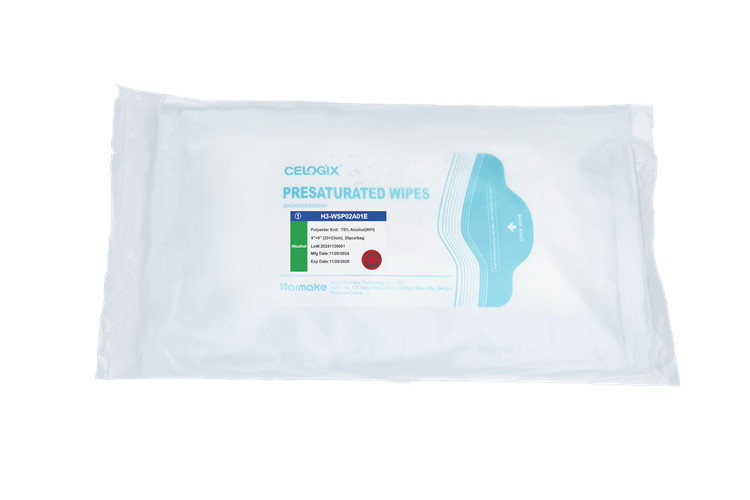
- Disposable Wipe Easy-Tear Bags: Stand-up structure, with repeated sealing stickers and easy-tear notches, ensuring that unused wipes remain moist.
4.4.2 Personal Care and Household Chemicals Solutions
- Facial Mask Easy-Tear Bags: Composite structure of PET/PE, with high printing precision, V-shaped notches at the top, and tear strength ≤ 15N, convenient for consumers to open quickly.
- Laundry Detergent Easy-Tear Pods Outer Bags: Multi-layer composite film, with strong barrier performance, easy-tear notches, and suitable for packaging water-soluble laundry detergent pods, preventing moisture absorption and agglomeration.
5. Development Trends and Future Outlook
With the continuous upgrading of consumer demand and the tightening of environmental protection policies, easy-tear bags are developing towards monomaterialization, intelligence and functional integration, and will further expand their application boundaries in emerging fields.
5.1 Technological Development Trends
- Monomaterialization Dominance: The traditional multi-material composite structure is gradually replaced by single-material (e.g., PE, PLA) easy-tear films, solving the recycling difficulty of composite packaging. Manufacturers are developing high-performance monomaterial composite technologies to ensure that single-material bags have both tearability and barrier performance.
- Intelligent Function Integration: Easy-tear bags are integrated with intelligent components such as QR codes, RFID tags and temperature-sensitive inks. For example, medical easy-tear bags with RFID tags can realize real-time traceability of drugs; food easy-tear bags with temperature-sensitive inks can remind consumers of product storage temperature.
- Child-Resistant and Elderly-Friendly Dual Design: Developing easy-tear bags that balance child resistance and elderly friendliness, with a ""two-step opening"" structure (e.g., press and tear) to prevent children from accidentally opening, while ensuring that the elderly can open them with moderate force.
5.2 Market and Application Outlook
In the future, the global easy-tear bag market will maintain a growth rate of 6.5% annually, driven by the medical, food and electronic industries. Emerging application scenarios such as biopharmaceuticals, plant-based food and wearable devices will bring new growth points for easy-tear bags.
For enterprises, mastering core technologies such as material matching and mechanical weakening, and providing customized industry solutions are the key to enhancing competitiveness. For the industry, promoting the formulation of unified tear performance standards and recycling systems will accelerate the standardized and sustainable development of the easy-tear bag industry.
6. Conclusion
Easy-tear bags, as a flexible packaging solution integrating convenience, protection and efficiency, have become an indispensable part of modern industry and daily life. Their core advantages lie in unmatched user experience, excellent barrier performance, high compatibility with automated production, and customizable structural design. The precise control of production processes such as material compounding, mechanical weakening and quality testing is the foundation for ensuring the stable performance of easy-tear bags.
From medical sterile packaging to food fresh-keeping packaging, from industrial part protection to daily chemical portability packaging, targeted industry solutions make easy-tear bags adapt to the diverse needs of different fields. Facing the future, with the development of monomaterialization, intelligence and functional integration technologies, easy-tear bags will not only optimize the user experience but also contribute to the sustainable development of the packaging industry, becoming a key link connecting product quality and consumer demand.