1. Overview of Powder Transfer Bags
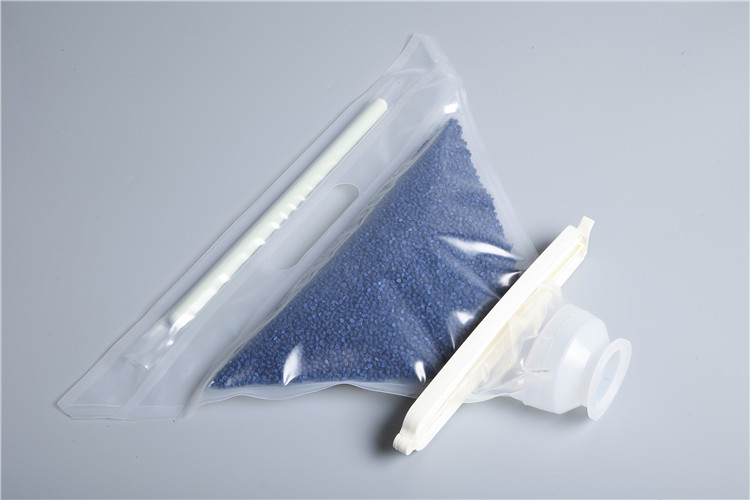
Powder transfer bags are specialized flexible containers designed for the storage, transportation, and transfer of powder, granular, or flaky materials. They are engineered to withstand the mechanical stress of loading, unloading, and transfer, while preventing material leakage, moisture absorption, contamination, and dust emission. Unlike traditional rigid containers (such as metal drums and plastic buckets), powder transfer bags have the advantages of adjustable load capacity (from 500kg to 2000kg), lightweight design, space-saving storage (foldable when not in use), and compatibility with various transfer equipment (such as forklifts, cranes, and automated conveyor systems).
The core functions of powder transfer bags include three aspects: material protection (isolating external factors such as moisture, oxygen, dust, and microorganisms to maintain the physical and chemical properties of powder materials),operational safety (preventing material leakage, dust explosion, and operator exposure to toxic/harmful powders), and transfer efficiency (realizing large-volume, rapid transfer of materials to reduce manual operation and improve production efficiency). To meet the diverse needs of different industries, powder transfer bags are available in various types, materials, and structural designs, and must comply with relevant international standards and regulatory requirements (such as ISO 21898 for FIBCs, GMP for pharmaceutical applications, and ATEX for explosive powder handling).
The application value of powder transfer bags is reflected throughout the entire powder material handling chain: from raw material storage and transportation to in-plant transfer and final product packaging. With the development of intelligent manufacturing and the increasing emphasis on environmental protection and safety, powder transfer bags have become an indispensable key consumable in modern powder material handling processes, playing a vital role in optimizing production processes, reducing operational costs, and ensuring product quality.
2. Core Materials of Powder Transfer Bags: Characteristics and Selection Criteria
The performance of
powder transfer bags is directly determined by their material composition, which determines their compatibility with powder materials, mechanical strength, barrier properties, and safety. The core materials of powder transfer bags mainly include base fabrics, inner liners, and auxiliary materials (such as lifting loops, discharge ports, and valves). Selecting the right material is the foundation for ensuring the safe and efficient transfer of powder materials.
2.1 Base Fabrics: Mechanical Strength and Structural Foundation
The base fabric is the outer layer of powder transfer bags, responsible for bearing the weight of the powder material, withstanding mechanical stress during loading, unloading, and transfer, and providing basic protection against external damage. Common base fabric materials include polypropylene (PP), polyethylene (PE), polyester (PET), and modified composite fabrics, each with distinct characteristics and applicable scenarios:
- Polypropylene (PP) Base Fabric: The most widely used material for powder transfer bags, with excellent mechanical strength (tensile strength ≥3000N/5cm), wear resistance, and chemical resistance. It is lightweight, cost-effective, and suitable for most non-corrosive powder materials (such as food additives, pharmaceutical excipients, and mineral powders). PP base fabrics can be woven into different densities (from 100g/m² to 300g/m²) according to load capacity requirements; high-density PP fabrics are suitable for heavy-load transfer (1000kg-2000kg), while low-density fabrics are suitable for light-load transfer (500kg-1000kg). In addition, PP base fabrics can be treated with anti-UV, anti-static, or flame-retardant processes to meet special application requirements.
- Polyethylene (PE) Base Fabric: With better low-temperature resistance and flexibility than PP, it is suitable for the transfer of powder materials in low-temperature environments (down to -40℃). PE base fabrics have good moisture resistance but lower mechanical strength than PP, so they are mainly used for light-load transfer (≤1000kg) of moisture-sensitive powders (such as some chemical intermediates and food powders). Modified PE fabrics (such as HDPE) can improve mechanical strength, expanding their application scope.
- Polyester (PET) Base Fabric: With the highest mechanical strength and wear resistance among common base fabrics, it is suitable for heavy-load transfer (≥1500kg) and harsh operating environments (such as mining and new energy industries). PET base fabrics have good dimensional stability, high-temperature resistance (up to 120℃), and chemical resistance, making them suitable for the transfer of abrasive, high-temperature, or corrosive powder materials (such as battery cathode/anode materials, metal powders, and chemical catalysts). However, PET base fabrics are relatively expensive, so they are mainly used in high-end or special application scenarios.
- Modified Composite Fabrics: Composed of two or more materials (such as PP/PET, PP/PE) to integrate their advantages. For example, PP/PET composite fabrics combine the cost-effectiveness of PP and the high strength of PET, suitable for heavy-load transfer of general powder materials; PP/PE composite fabrics combine the mechanical strength of PP and the moisture resistance of PE, suitable for moisture-sensitive, heavy-load powders. In addition, composite fabrics can be coated with a layer of barrier material (such as PVDC) to improve moisture and oxygen barrier properties, suitable for high-value, easily degraded powder materials (such as active pharmaceutical ingredients and biological powders).
2.2 Inner Liners: Contamination Prevention and Material Protection
The inner liner is the inner layer of powder transfer bags, directly in contact with powder materials, responsible for preventing material leakage, moisture absorption, contamination, and adsorption. The selection of inner liner materials depends on the properties of the powder material (hygroscopicity, corrosiveness, toxicity) and regulatory requirements (such as food-grade, pharmaceutical-grade). Common inner liner materials include:
- Polyethylene (PE) Inner Liner: The most widely used inner liner material, available in low-density polyethylene (LDPE) and high-density polyethylene (HDPE). LDPE liners have good flexibility and sealing performance, suitable for most powder materials, especially those with fine particle sizes (≤100 mesh), preventing powder leakage. HDPE liners have better mechanical strength and chemical resistance, suitable for corrosive powder materials (such as acids, alkalis, and chemical intermediates). PE liners can be made into single-layer (thickness 0.1mm-0.2mm) or multi-layer (thickness 0.3mm-0.5mm) structures according to leakage prevention requirements; multi-layer liners are suitable for toxic, harmful, or high-value powder materials to ensure double protection.
- Polypropylene (PP) Inner Liner: With better high-temperature resistance than PE (up to 100℃), it is suitable for the transfer of high-temperature powder materials (such as hot-dried mineral powders and chemical intermediates). PP liners have good chemical resistance but lower flexibility than PE, so they are mainly used for powder materials with moderate particle sizes (≥100 mesh) to avoid liner damage caused by sharp particles.
- Aluminum Foil Composite Liner: Composed of PE/aluminum foil/PE composite materials, with excellent moisture, oxygen, and light barrier properties. It is suitable for high-value, easily oxidized, or moisture-sensitive powder materials (such as active pharmaceutical ingredients, biological powders, and high-end food additives). Aluminum foil liners can effectively isolate external moisture and oxygen, extending the shelf life of powder materials, but they are relatively expensive and have poor flexibility, requiring careful handling during loading and unloading to avoid puncture.
- Fluorinated Polymer Liner: Made of materials such as PTFE (Teflon) or PVDF, with excellent chemical resistance, non-adhesion, and high-temperature resistance. It is suitable for the transfer of highly corrosive, sticky, or high-temperature powder materials (such as strong acids, strong alkalis, and chemical catalysts). Fluorinated polymer liners have low material adsorption, preventing powder materials from adhering to the liner, ensuring complete material discharge, but they are costly and mainly used in special high-end application scenarios (such as pharmaceutical and fine chemical industries).
2.3 Auxiliary Materials: Operational Safety and Convenience
Auxiliary materials of powder transfer bags include lifting loops, discharge ports, valves, and sealing components, which are critical to ensuring operational safety and transfer efficiency. Their material selection must match the base fabric and inner liner, and meet the requirements of mechanical strength and safety:
- Lifting Loops: Responsible for bearing the total weight of the bag and materials, so they must have sufficient tensile strength. Common materials include PP, PET, and steel wire-reinforced PP. PP lifting loops are suitable for light-load transfer (≤1000kg); PET lifting loops are suitable for heavy-load transfer (≥1500kg); steel wire-reinforced PP lifting loops have the highest tensile strength, suitable for ultra-heavy-load transfer (≥2000kg) or harsh operating environments. Lifting loops are usually woven into the base fabric to ensure connection strength, and their number (2 loops, 4 loops) and design (top lift, bottom lift) can be selected according to transfer equipment and operational needs.
- Discharge Ports and Valves: Used for discharging powder materials, with materials including PP, PE, and stainless steel. PP/PE discharge ports are cost-effective, suitable for most powder materials; stainless steel discharge ports have good corrosion resistance and hygiene, suitable for pharmaceutical, food, and other industries with high hygiene requirements. Valves (such as butterfly valves, ball valves, and slide valves) are used to control the discharge speed and prevent material leakage; for explosive or toxic powders, airtight valves are used to avoid dust emission and operator exposure.
- Sealing Components: Including zippers, heat-sealing strips, and adhesive tapes, used to seal the filling port and discharge port. Food-grade and pharmaceutical-grade sealing components (such as food-grade zippers and heat-sealing strips) must be used in food and pharmaceutical industries to avoid contamination; for moisture-sensitive or toxic powders, airtight sealing components (such as double zippers and heat-sealing + adhesive sealing) are used to ensure sealing performance.
2.4 Key Material Selection Criteria
When selecting the material of powder transfer bags, enterprises must comprehensively consider the following four core criteria to ensure compatibility with powder materials and operational safety:
- Material Compatibility: The base fabric, inner liner, and auxiliary materials must be compatible with the powder material, avoiding chemical reactions (such as corrosion, degradation) between the bag material and the powder, which may cause material contamination or bag damage. For example, corrosive powders (such as acids, alkalis) should select PE or fluorinated polymer liners; sticky powders should select non-adhesive liners (such as PTFE); high-temperature powders should select PET or PP liners with high-temperature resistance.
- Mechanical Strength Matching: The material strength (tensile strength, wear resistance, puncture resistance) must match the load capacity of the powder material and the mechanical stress during transfer. For heavy-load, abrasive powders (such as mineral powders, metal powders), high-strength materials (such as PET base fabric, steel wire-reinforced lifting loops) should be selected; for light-load, fine powders (such as food additives), cost-effective PP materials can be selected.
- Regulatory Compliance: According to the industry, select materials that meet relevant regulatory requirements. For example, pharmaceutical and food industries must select food-grade, pharmaceutical-grade materials (compliant with FDA, GMP) with no toxic substances leaching; explosive powder handling (such as chemical intermediates, battery materials) must select anti-static, flame-retardant materials (compliant with ATEX); medical and biological industries must select materials with good biocompatibility and no microbial contamination.
- Cost-Effectiveness: On the premise of meeting performance and regulatory requirements, select materials with appropriate cost to optimize operational costs. For general powder materials, cost-effective PP base fabric and PE liner can be selected; for special high-end powder materials (such as active pharmaceutical ingredients, battery materials), high-performance materials (such as PET, aluminum foil liner) can be selected according to needs, avoiding over-investment or insufficient performance.
3. Classification and Application of Powder Transfer Bags in Various Industries
Powder transfer bags can be classified according to structural design, load capacity, and special functions, and their application scenarios vary significantly in different industries. Understanding the classification and industry applications is crucial for selecting the right powder transfer bag.
3.1 Classification of Powder Transfer Bags
3.1.1 Classification by Structural Design
- Open-Top Powder Transfer Bags: With an open filling port, suitable for manual or mechanical filling of non-hygroscopic, non-toxic powder materials (such as mineral powders, construction materials). The filling port can be sealed with a zipper or adhesive tape after filling. This type of bag is simple in structure, cost-effective, but has poor sealing performance, not suitable for moisture-sensitive or toxic powders.
- Closed-Top Powder Transfer Bags: With a sealed filling port (equipped with a filling valve or flange), suitable for automated filling of moisture-sensitive, toxic, or explosive powder materials (such as pharmaceutical powders, chemical intermediates). The closed structure prevents dust emission and moisture absorption, ensuring operational safety and material quality. This type of bag is widely used in pharmaceutical, food, and fine chemical industries.
- Bottom-Discharge Powder Transfer Bags: Equipped with a discharge port and valve at the bottom, suitable for automated discharge of powder materials, avoiding manual operation and improving transfer efficiency. The discharge speed can be controlled by the valve, suitable for continuous production lines (such as food processing, pharmaceutical production). This type of bag is usually used with automated transfer equipment (such as conveyors, mixers).
- With-Inner-Bag Powder Transfer Bags: Composed of an outer base fabric and an inner liner (removable or integrated), suitable for high-value, easily contaminated powder materials (such as active pharmaceutical ingredients, biological powders). The inner liner can be replaced after use, reducing contamination risks and improving the reuse rate of the outer base fabric, optimizing operational costs.
3.1.2 Classification by Load Capacity
- Light-Load Powder Transfer Bags: Load capacity 500kg-1000kg, suitable for small-batch transfer of powder materials (such as laboratory reagents, small-batch food additives). They are lightweight, easy to handle, and cost-effective, usually made of low-density PP base fabric and single-layer PE liner.
- Medium-Load Powder Transfer Bags: Load capacity 1000kg-1500kg, the most widely used type, suitable for large-batch transfer of general powder materials (such as pharmaceutical excipients, chemical intermediates, food additives). They are made of medium-density PP base fabric and double-layer PE liner, balancing performance and cost.
- Heavy-Load Powder Transfer Bags: Load capacity ≥1500kg, suitable for heavy-load transfer of powder materials (such as mineral powders, battery materials, metal powders). They are made of high-density PP/PET composite base fabric and multi-layer PE liner, with steel wire-reinforced lifting loops to ensure mechanical strength and operational safety.
3.1.3 Classification by Special Functions
- Anti-Static Powder Transfer Bags: Treated with anti-static processes (such as adding anti-static agents to base fabric and liner), with surface resistance ≤10¹¹Ω, suitable for the transfer of explosive powder materials (such as chemical intermediates, battery materials, and combustible food powders). They can effectively eliminate static electricity, preventing dust explosion caused by static discharge, complying with ATEX standards.
- Flame-Retardant Powder Transfer Bags: Treated with flame-retardant processes (such as adding flame-retardant agents), with flame-retardant performance meeting national standards, suitable for the transfer of flammable, explosive powder materials (such as chemical catalysts, combustible mineral powders). They can prevent the spread of fire, reducing operational risks.
- Hygienic-Grade Powder Transfer Bags: Made of food-grade, pharmaceutical-grade materials (compliant with FDA, GMP), with no toxic substances leaching, no microbial contamination, and smooth inner liner (easy to clean and discharge). Suitable for pharmaceutical, food, and biological industries (such as active pharmaceutical ingredients, food additives, biological powders).
- Corrosion-Resistant Powder Transfer Bags: Made of corrosion-resistant materials (such as PE, fluorinated polymer liner, PET base fabric), suitable for the transfer of corrosive powder materials (such as acids, alkalis, chemical intermediates). They can prevent bag damage and material contamination caused by corrosion.
3.2 Industry Application Scenarios
3.2.1 Pharmaceutical Industry
The pharmaceutical industry has strict requirements for powder transfer bags, focusing on hygiene, sterility, no contamination, and regulatory compliance (GMP, FDA). Common powder materials include active pharmaceutical ingredients (APIs), pharmaceutical excipients (starch, lactose, cellulose), and pharmaceutical intermediates.
Recommended powder transfer bags: Closed-top, bottom-discharge hygiene-grade bags, with PP/PET base fabric and PE/aluminum foil inner liner (for APIs) or PE inner liner (for excipients). The inner liner must be pharmaceutical-grade, with no toxic substances leaching, no microbial contamination; the filling and discharge ports must be airtight to prevent dust emission and contamination. For explosive pharmaceutical intermediates, anti-static, flame-retardant hygiene-grade bags are recommended. Typical applications include the transfer of API powders, excipient mixing, and final product packaging.
3.2.2 Food and Beverage Industry
The food and beverage industry focuses on food safety, hygiene, and moisture resistance, with common powder materials including food additives (sugar, salt, spices), food powders (milk powder, soybean powder, flour), and beverage raw materials (coffee powder, tea powder).
Recommended powder transfer bags: Closed-top or open-top food-grade bags, with PP base fabric and PE inner liner (food-grade). For moisture-sensitive food powders (such as milk powder, coffee powder), aluminum foil composite liners are recommended to improve moisture barrier properties; for combustible food powders (such as flour, soybean powder), anti-static bags are recommended. The bags must be easy to clean and discharge, avoiding material residue and contamination. Typical applications include food additive storage and transfer, food powder mixing, and beverage production.
3.2.3 Fine Chemical Industry
The fine chemical industry has diverse powder material properties, including corrosive, explosive, toxic, and hygroscopic materials (such as chemical intermediates, catalysts, pigments, and dyes). The core requirements for powder transfer bags are corrosion resistance, anti-static, flame-retardant, and leakage prevention.
Recommended powder transfer bags: Corrosion-resistant, anti-static, flame-retardant closed-top bags, with PET/PP composite base fabric and PE/fluorinated polymer inner liner. For highly corrosive materials, fluorinated polymer liners are recommended; for explosive materials, anti-static, flame-retardant bags complying with ATEX standards are recommended. The discharge port is equipped with airtight valves to prevent material leakage and operator exposure. Typical applications include chemical intermediate transfer, catalyst storage, and pigment mixing.
3.2.4 New Energy Industry
The new energy industry (such as lithium-ion batteries, solar cells) uses powder materials including battery cathode/anode materials (lithium cobalt oxide, graphite powder), electrolyte materials, and conductive powders. The core requirements are high purity, no contamination, anti-static, and mechanical strength.
Recommended powder transfer bags: Heavy-load, anti-static closed-top bags, with PET/PP composite base fabric and PE inner liner (high-purity, non-adhesive). The bags must have high mechanical strength to withstand heavy-load transfer (1500kg-2000kg), and anti-static performance to prevent static discharge (complying with ATEX standards). The inner liner is smooth to avoid material adsorption, ensuring the purity of battery materials. Typical applications include battery material storage and transfer, electrode production.
3.2.5 Mining and Building Materials Industry
The mining and building materials industry uses large quantities of powder materials (such as mineral powders, cement, sand, and stone powder), with core requirements of high load capacity, wear resistance, and cost-effectiveness.
Recommended powder transfer bags: Heavy-load, open-top/bottom-discharge bags, with PP/PET base fabric (high-density, wear-resistant) and single-layer PE liner (for moisture prevention). The bags have high load capacity (1500kg-2000kg), wear-resistant base fabric to withstand harsh operating environments, and cost-effective materials to reduce operational costs. Typical applications include mineral powder transportation, cement transfer, and construction site material handling.
4. Customized Industry Solutions for Powder Transfer Bags
Different industries and powder materials have unique requirements for powder transfer bags. A one-size-fits-all solution cannot meet the diverse needs of enterprises. Therefore, customized solutions based on enterprise-specific needs are the key to optimizing powder handling processes and reducing operational risks. The following elaborates on customized solutions for typical industries:
4.1 Pharmaceutical Industry: Sterile, Hygienic, and Traceable Solution
Core needs: Sterility, no contamination, regulatory compliance (GMP, FDA), traceability, and complete material discharge.
Customized solution:
- Material customization: Adopt pharmaceutical-grade PP/PET composite base fabric (non-toxic, no leaching) and aluminum foil/PE composite inner liner (moisture-proof, oxygen-proof, sterile). The inner liner is pre-sterilized (gamma ray irradiation, SAL ≤10⁻⁶) to ensure sterility.
- Structural customization: Closed-top, bottom-discharge structure, with a filling valve (flange connection) and a butterfly discharge valve (stainless steel, pharmaceutical-grade) to ensure airtightness and avoid dust emission. The inner liner is integrated with the outer bag, with no dead corners, ensuring complete material discharge (residue ≤0.1%).
- Function customization: Add traceability labels (RFID tags) to record bag batch number, production date, sterilization batch number, and material information, realizing full-process traceability. The bag surface is designed with a frosted marking area for manual labeling.
- Compliance customization: Provide complete quality certification documents (biocompatibility test report, sterility test report, FDA/GMP certification) to meet regulatory inspection requirements.
4.2 New Energy Industry: High-Purity, Anti-Static, Heavy-Load Solution
Core needs: High purity (no contamination), anti-static (prevent static discharge), heavy-load transfer (1500kg-2000kg), and non-adhesive (complete discharge).
Customized solution:
- Material customization: Adopt high-purity PET/PP composite base fabric (no impurities, no leaching) and high-purity PE inner liner (non-adhesive, smooth surface). The materials are tested for heavy metals and impurities to ensure that the powder material (battery material) is not contaminated.
- Structural customization: Heavy-load bottom-discharge structure, with 4 steel wire-reinforced PP lifting loops (tensile strength ≥5000N/loop) to withstand heavy-load transfer. The discharge port is equipped with a slide valve (stainless steel) to control discharge speed, suitable for automated production lines.
- Function customization: Anti-static treatment (surface resistance ≤10¹⁰Ω) to meet ATEX standards, preventing static discharge. The inner liner is treated with anti-adhesion technology to avoid battery material adsorption, ensuring complete discharge.
- Quality customization: Strict quality control of raw materials and production processes, with each batch of bags inspected for mechanical strength, anti-static performance, and purity, providing quality test reports.
4.3 Fine Chemical Industry: Corrosion-Resistant, Explosion-Proof Solution
Core needs: Corrosion resistance (adapt to corrosive powders), explosion-proof (anti-static, flame-retardant), leakage prevention, and chemical compatibility.
Customized solution:
- Material customization: Adopt corrosion-resistant PET base fabric and fluorinated polymer (PTFE) inner liner, which are compatible with corrosive powders (acids, alkalis, chemical intermediates) and prevent bag damage and material contamination.
- Structural customization: Closed-top, double-sealing structure (filling port and discharge port are double-sealed) to ensure no leakage. The discharge port is equipped with an airtight ball valve (fluorinated polymer) to avoid material leakage and operator exposure.
- Function customization: Anti-static (surface resistance ≤10¹¹Ω) and flame-retardant treatment (flame-retardant grade B1) to meet ATEX standards, preventing dust explosion and fire. The bag body is reinforced with a protective layer to improve wear resistance and puncture resistance.
- Compatibility customization: Conduct chemical compatibility tests according to the properties of the powder material, ensuring that the bag material does not react with the powder, providing compatibility test reports.
4.4 Food Industry: Food-Grade, Moisture-Proof, Efficient Transfer Solution
Core needs: Food safety (food-grade materials), moisture-proof (avoid material degradation), efficient transfer (automated discharge), and cost-effectiveness.
Customized solution:
- Material customization: Adopt food-grade PP base fabric and PE/aluminum foil composite inner liner (for moisture-sensitive foods) or PE inner liner (for general foods), complying with FDA standards, no toxic substances leaching.
- Structural customization: Closed-top, bottom-discharge structure, with a filling port (zipper sealing) and a discharge valve (PP food-grade) to facilitate automated filling and discharge, improving transfer efficiency. The bag body is foldable, saving storage space when not in use.
- Function customization: Moisture-proof treatment (aluminum foil liner) to extend the shelf life of food powders; anti-static treatment (for combustible foods such as flour) to prevent dust explosion. The inner liner is smooth, easy to clean and discharge, avoiding material residue.
- Cost customization: Select cost-effective food-grade materials, optimize structural design to reduce material usage, and provide reusable outer bags (replaceable inner liner) to reduce operational costs.
5. Key Buying Considerations and Common Mistakes to Avoid
5.1 Key Buying Considerations
When purchasing powder transfer bags, enterprises must focus on the following key points to ensure that the selected bags meet operational needs and safety requirements:
- Clarify Material Properties: First, clarify the physical and chemical properties of the powder material (particle size, density, hygroscopicity, corrosiveness, explosiveness, toxicity), which is the basis for selecting bag materials and structural design. For example, fine, explosive powders require anti-static, closed-top bags; corrosive powders require corrosion-resistant liners.
- Confirm Load Capacity and Transfer Equipment: Determine the load capacity of the bag according to the transfer volume (light-load, medium-load, heavy-load), and select the appropriate lifting loop material and number according to the transfer equipment (forklift, crane). For example, forklift transfer is suitable for 2-loop bags; crane transfer is suitable for 4-loop bags.
- Comply with Regulatory Requirements: According to the industry, select bags that meet relevant regulatory standards (GMP, FDA, ATEX). For example, pharmaceutical and food industries must select hygiene-grade bags with relevant certifications; explosive powder handling must select anti-static, flame-retardant bags complying with ATEX standards.
- Evaluate Supplier Strength: Select suppliers with strong R&D capabilities, strict quality control, and complete after-sales service. Suppliers should be able to provide customized solutions, complete quality certification documents, and timely after-sales support (such as bag damage handling, technical guidance).
- Test Sample Performance: Before large-scale purchase, conduct performance tests on sample bags (mechanical strength, sealing performance, compatibility, anti-static performance) to ensure that the bags meet operational needs. For example, test the sealing performance to avoid material leakage; test the compatibility to avoid material contamination.
5.2 Common Mistakes to Avoid
- Ignoring Material Compatibility: Selecting common materials without considering the properties of the powder material, leading to chemical reactions between the bag material and the powder, resulting in material contamination or bag damage. For example, using PP liners for corrosive powders, leading to liner corrosion and material leakage.
- Overlooking Regulatory Compliance: Selecting bags that do not meet industry regulatory requirements, leading to regulatory penalties or product quality problems. For example, using non-pharmaceutical-grade bags in the pharmaceutical industry, leading to API contamination.
- Underestimating Mechanical Strength: Selecting bags with insufficient mechanical strength to save costs, leading to bag rupture during transfer, resulting in material loss and safety accidents. For example, using low-density PP bags for heavy-load transfer, leading to lifting loop breakage.
- Neglecting Special Functions: Ignoring special functions (anti-static, flame-retardant, moisture-proof) for special powder materials, leading to operational risks. For example, using ordinary bags for explosive powders, leading to dust explosion.
- Ignoring After-Sales Service: Selecting suppliers with poor after-sales service, leading to inability to solve problems in time (such as bag damage, performance failure), affecting production progress.
6. Technical Development Trends and Future Outlook
6.1 Technical Development Trends
With the development of intelligent manufacturing, environmental protection, and safety requirements, powder transfer bags are developing towards high performance, intelligence, environmental protection, and customization, showing the following clear trends:
- High-Performance Material Development: Developing new composite materials with better mechanical strength, corrosion resistance, and barrier properties. For example, nanocomposite base fabrics with improved wear resistance and puncture resistance; biodegradable materials (such as biodegradable PP/PE) to reduce environmental pollution; high-purity, non-adhesive liners for high-end powder materials (such as battery materials, APIs).
- Intelligent Upgrade: Integrating intelligent components (RFID tags, temperature/humidity sensors) into powder transfer bags, realizing real-time monitoring of bag status (load capacity, temperature, humidity) and material information (batch number, expiration