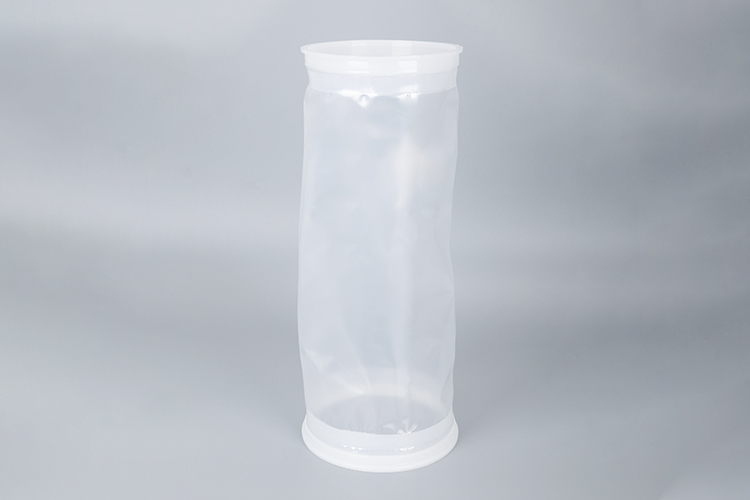
Bio Storage Bag: Matching the Bag to the Storage Condition
Release time:2026-10-28
Visits:0
Storage is the part of a bioprocess that gets the least engineering attention and causes the most unpleasant surprises. A bag that performed perfectly during a two-hour hold fails after eleven days at 2 to 8 °C, or cracks after one freeze at −40 °C, or sags in a bin and splits a seam. The bag did not change. The storage condition did.
Choosing a bio storage bag means answering four questions in order: how much liquid, what geometry holds it, what temperature it will see, and how it will be supported and moved.
Wuxi Harmake Technology Co., Ltd. manufactures
2D and 3D single-use storage bags, cryopreservation bags and drum liners on a five-layer co-extruded film, in volumes from a few litres to 1000 L.
Geometry First: 2D or 3D
2D Bags
A 2D bag is two film layers sealed at the perimeter. Empty, it is flat; full, it becomes a pillow. Small 2D bags — 3 L and below — are the workhorse for buffer, sample and intermediate holds because they fill fast, drain almost completely and store flat.
Their limitation is hydrostatic pressure. A tall pillow of liquid puts the seam under load, and the highest stress sits at the corner where the seal turns. Large 2D bags therefore need a support tray, and they should never be lifted by the film.
3D Bags
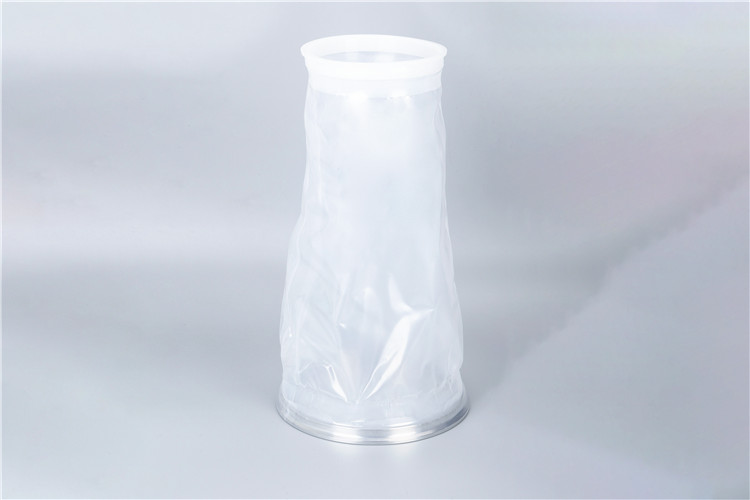
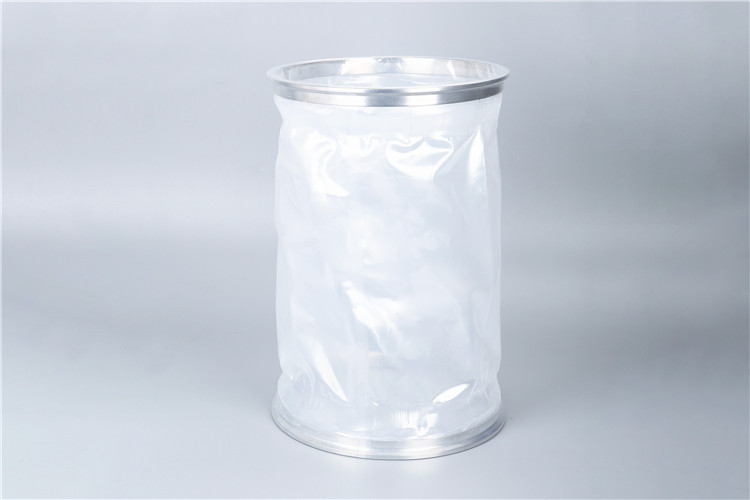
A 3D bag has a formed base, so it stands in a bin or on a pallet and holds a defined volume with a defined footprint. Harmake's 3D range covers 100 L at 740 × 540 × 300 mm, 200 L in two footprints, 250 L, 500 L in two footprints and 1000 L at 1100 × 1080 × 940 mm.
Three advantages follow:
• Volume accuracy. The footprint fixes the fill height, so the volume is reproducible.
• Handling. The bag sits in a rigid container and can be moved by pallet truck or bin lift.
• Mixing. A cubic geometry gives better bulk mixing than a pillow when the bag is agitated or recirculated.
The cost is that a 3D bag needs its container. A bag without a bin is a bag waiting to burst.
Film Performance Under Storage Conditions
The film in Harmake's storage bags is a five-layer co-extrusion at a nominal 0.325 mm, with a ULDPE product-contact layer, polyethylene structural layers and an EVOH barrier. The published physical data is what a storage specification should be built on:
|
Property |
Value |
Method |
|
Tensile strength |
approx. 13 MPa |
ASTM D-882 |
|
Elongation |
approx. 300 % |
ASTM D-882 |
|
Cold break temperature |
below −45 °C |
ISO 8570 |
|
Water vapour transmission |
approx. 0.32 g/m²/day (23 °C, 100 % RH) |
ASTM D-1249 |
|
Oxygen transmission |
approx. 0.05 cm³/m²/day/bar (23 °C, 0 % RH) |
ASTM D-3985 |
|
Carbon dioxide transmission |
approx. 0.2 |
ASTM F-2476 |
Why the Barrier Numbers Matter for Storage
Over a 30-day hold at 2 to 8 °C, oxygen ingress through the wall oxidises sensitive components and water loss concentrates the buffer. A plain polyethylene bag is adequate for a shift; an EVOH-containing film is what makes a month-long hold defensible. The lower the temperature, the slower the chemistry — but the film still governs the total flux.
Freeze-Thaw Behaviour
Cold break below −45 °C tells you the film survives freezing. It does not tell you the bag survives freezing. Ice expands, and a bag frozen in a rigid bin with no headspace will split at a seam regardless of film grade.
Freeze with headspace, freeze flat where the geometry allows, and thaw slowly in a controlled environment rather than in a warm water bath that shocks the weld.
Cryogenic Storage
For −80 °C and liquid nitrogen work, a standard storage bag is the wrong product. Harmake supplies cryopreservation bags built for those temperatures, with the tubing and port configuration suited to a cryogenic workflow. The rules are strict: fill to the rated volume, leave expansion space, use the specified rack, and never handle a frozen bag by the tubing.
Ports, Sampling and Closure
A
storage bag is only as good as its access points. Harmake's storage bags are configured with TC25 sanitary clamps, Robert clamps, needle-free sampling valves, MPC quick connectors and C-FLEX tubing, and each bag is integrity tested before release.
Two design points that are easy to get wrong:
• Sampling from the bottom. A needle-free valve on a dip tube at the base gives a representative sample; a valve on a side port near the top gives you the liquid that has been sitting in the tubing.
• Vent path. A storage bag that will be drained needs a sterile vent, or it will collapse and trap product. A bag that will be filled needs a vent, or it will balloon and stress the seams.
Support, Movement and Shipping
Shipping a filled bag is a validation exercise, not a logistics decision. Vibration, drop and pressure change all load the welds.
• Use the container the bag was designed for. A bag in the wrong bin sags into the corners and loads the seams unevenly.
• Validate the shipping configuration with the actual fill volume, including a partial fill, because a partially filled bag sloshes and a full one does not.
• Check the bag after transport, not just before dispatch.
• Keep tubing clamped and capped during transit; an open connector is a contamination path and a leak path.
Documentation Package
Harmake documents the film against ISO 10993 parts 4, 5, 10 and 11, USP chapters on sterility and biological reactivity including Class VI, the USP plastic materials chapter, and the European Pharmacopoeia plastic container monograph. Bags are gamma sterilized and 100 % integrity tested before release.
A regulated site should still run its own extractables study with the actual product and the actual hold time. Supplier data describes the material; your study describes your product.
Selection Summary
|
Condition |
Recommended format |
|
Up to 3 L, short hold |
2D bag, flat storage |
|
20 L to 200 L, days to weeks |
2D in tray or small 3D in bin |
|
250 L to 1000 L, weeks |
3D bag in rigid bin, EVOH film |
|
2 to 8 °C, 30 days |
3D with barrier film, vented |
|
−40 °C and below |
Cryopreservation bag, headspace, controlled thaw |
|
Bulk powder or paste |
Drum liner or powder charging bag |
A
bio storage bag is a container chosen against a temperature, a duration and a geometry. Get those three right and the film does the rest. Get them wrong and no amount of film performance will save the batch.