Sterile Continuous Bag: Engineering a Continuous Aseptic Transfer
Release time:2026-10-28
Visits:0
Powder handling inside a containment isolator has one persistent problem: the container that receives the powder has to leave, and every time it leaves, the sterile boundary is at risk. A
sterile continuous bag solves this by making the container a continuous sleeve. Material fills a section, the section is sealed and cut away, and the next section is already attached and sterile. The barrier is never opened.
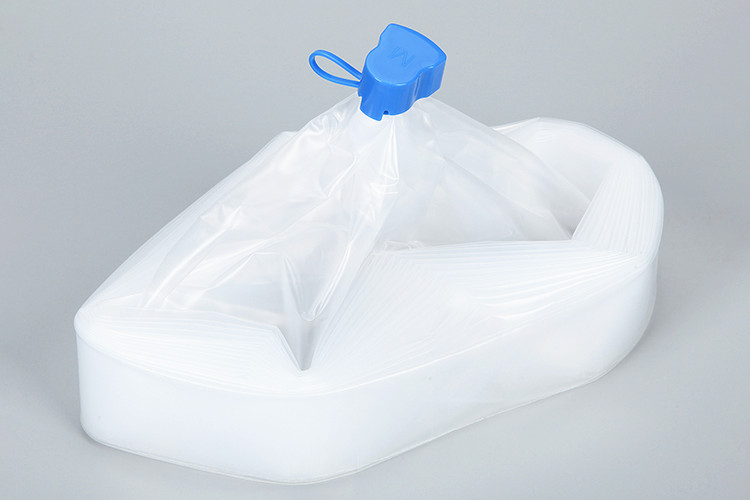
Sterile Continuous Sampling Closure Bags Contained Transfer Systems
The concept is simple. The engineering is not. Sleeve diameter, film gauge, seal geometry, cut position and docking hardware all interact, and getting one wrong turns a containment device into a leak.
How the Sleeve Actually Works
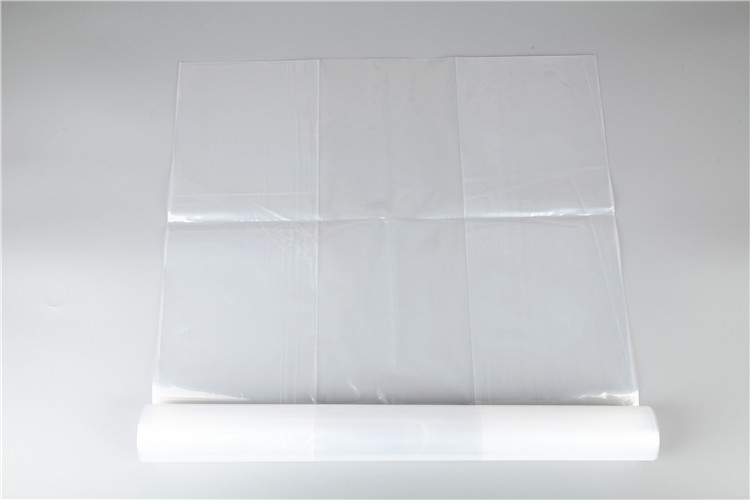
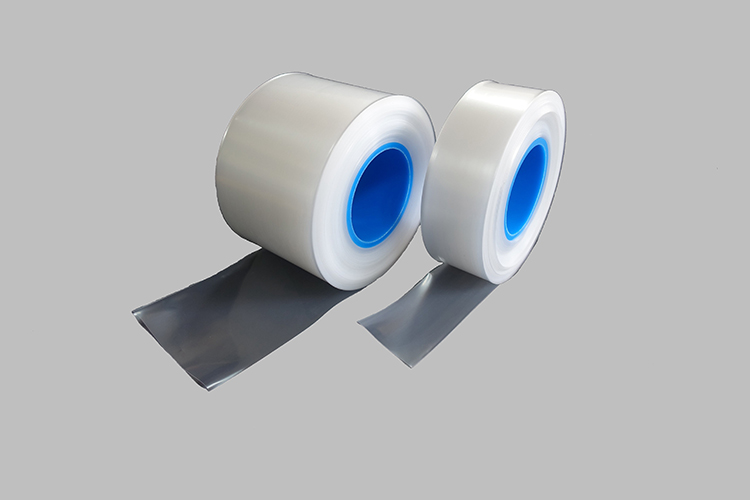
The bag arrives as a long, flat sleeve of sterile film, one end open for docking and the other closed. It is gamma-sterilized and its interior surface is sterile, with no residue left from the sterilization process. Docked to an isolator discharge port or a hopper outlet, the sleeve hangs or is supported below the port.
Material flows in. When a section is full, a heat sealer closes across the sleeve, and a cutter separates the filled section just below the seal. The filled section becomes a closed, contaminated-outside bag that can be removed and disposed of. The next section is still attached, still sealed at the top by the new seal, and still sterile inside.
Why the Seal, Not the Bag, Is the Critical Component
The seal has to do three things at once: hold the powder weight, provide a microbial barrier, and be strong enough that the cut does not propagate into it. That is a narrow window. A seal that is too cold leaks; a seal that is too hot becomes brittle and fails when the bag is lifted.
In practice, seal parameters are developed on the actual film, with the actual sealer, at the actual production speed. They are not transferable between suppliers, and they should be re-validated whenever the film lot changes.
Cut Position and the Dead Zone
The cutter runs a few millimetres below the seal. That gap — the dead zone — holds a small quantity of product that cannot be recovered. On a potent compound it also holds contamination that must be handled as hazardous waste. Keep the dead zone as short as the sealer and cutter geometry allows, and account for the loss when you calculate yield.
Sizing the Bag to the Process
Three numbers decide whether a continuous bag system works: sleeve diameter, section length, and total sleeve length per roll.
Sleeve Diameter Follows the Powder, Not the Port
A free-flowing, granular material moves well in a narrow sleeve. A cohesive or fine powder needs a wider sleeve or it bridges. As a working rule, sleeve diameter should be at least four to five times the largest agglomerate you expect, and the discharge port below it should not be narrower than the sleeve.
Undersizing the sleeve is the most common mistake. The symptom is not a jam — it is intermittent flow that forces the operator to shake the sleeve, which loads the seal and the dock.
Section Length Sets the Handling Weight
Each filled section becomes a bag an operator has to lift, carry and dispose of. Once a section passes roughly 15 kg to 20 kg, manual handling becomes the limiting factor and the section length should come down, even if that means more frequent sealing cycles.
Throughput Math
Take the target discharge rate in kilograms per hour, divide by the fill weight per section, and you get seals per hour. Compare that with the sealer cycle time including loading, sealing, cooling and cutting. If the required rate exceeds what one sealer can do, the answer is a second sealing station, not a longer bag.
|
Parameter |
Effect on the system |
|
Sleeve diameter |
Flow rate, bridging risk, dock size |
|
Fill weight per section |
Manual handling, seal strength demand, waste volume |
|
Total sleeve length |
Changeover interval, storage space, downtime |
|
Film gauge |
Puncture resistance, seal window, flexibility |
Docking and Containment at the Interface
The dock is where containment is won or lost. The sleeve must attach to the port without a gap, and the attachment must survive the pull of a full section hanging below it.
Port Compatibility
Continuous bags are normally supplied with a rigid collar or a cuff that mates to a specific port design. Confirm the port diameter, the retention method and the seal face before ordering. A sleeve held on by tape is not a containment device.
Supporting the Sleeve
A full sleeve weighs more than the empty one, and the load transfers straight to the dock. Support the sleeve from below — a simple cradle or a suspended loop is enough — so the dock sees only the pull of the film, not the weight of the product.
When the Bag Leaves the Isolator
The removed section is contaminated on the outside and clean on the inside. It should go into a waste bag or a closed container at the point of removal, not carried across a clean area. On potent compounds, the section may need to be surface-decontaminated before it leaves the suite.
Failure Modes and What They Look Like
|
Symptom |
Likely cause |
Fix |
|
Seal leaks at the ends |
Jaw pressure uneven, film not flat |
Check jaw alignment, keep the sleeve taut during sealing |
|
Seal tears when lifted |
Seal too hot, dwell too long |
Lower temperature, shorten dwell, re-validate |
|
Powder bridges in the sleeve |
Sleeve too narrow, cohesive powder |
Increase diameter, add vibration at the port |
|
Cut runs into the seal |
Cutter offset too small |
Increase dead zone, inspect blade |
|
Sleeve pulls off the dock |
No support under a full section |
Add cradle, check collar retention |
What to Ask a Supplier
Ask for the film specification, the sterilization method and dose range, the seal window the supplier has validated, and the port dimensions the cuff is designed for. Ask whether the sleeve can be supplied in the length your changeover interval needs, because a bag that runs out mid-batch costs more than a slightly longer roll.
Wuxi Harmake Technology Co., Ltd. manufactures
sterile continuous bags within its sealed transfer system range. Harmake also builds the flexible isolators, powder transfer bags and single-use process bags that connect to them, so the cuff, the port collar and the sleeve geometry are matched before the equipment reaches the suite. Ask Harmake for the film specification, the validated seal window and the sterilization dose range before you specify a port.
A sterile continuous bag is a small, unglamorous component. It is also the component that decides whether your containment strategy holds during the part of the process that everyone forgets to validate — the discharge. When a sleeve keeps failing at the seal, the sealer is usually the cause, and a short conversation with Harmake about jaw geometry and dwell time resolves it faster than another trial run.